3 Tesla MRI
An MRI makes detailed pictures of the inside of the body with a magnet and radio waves, and no radiation. Tesla's scanner is a 3 Tesla machine: twice the field of the 1.5 Tesla scanners found in many centres.
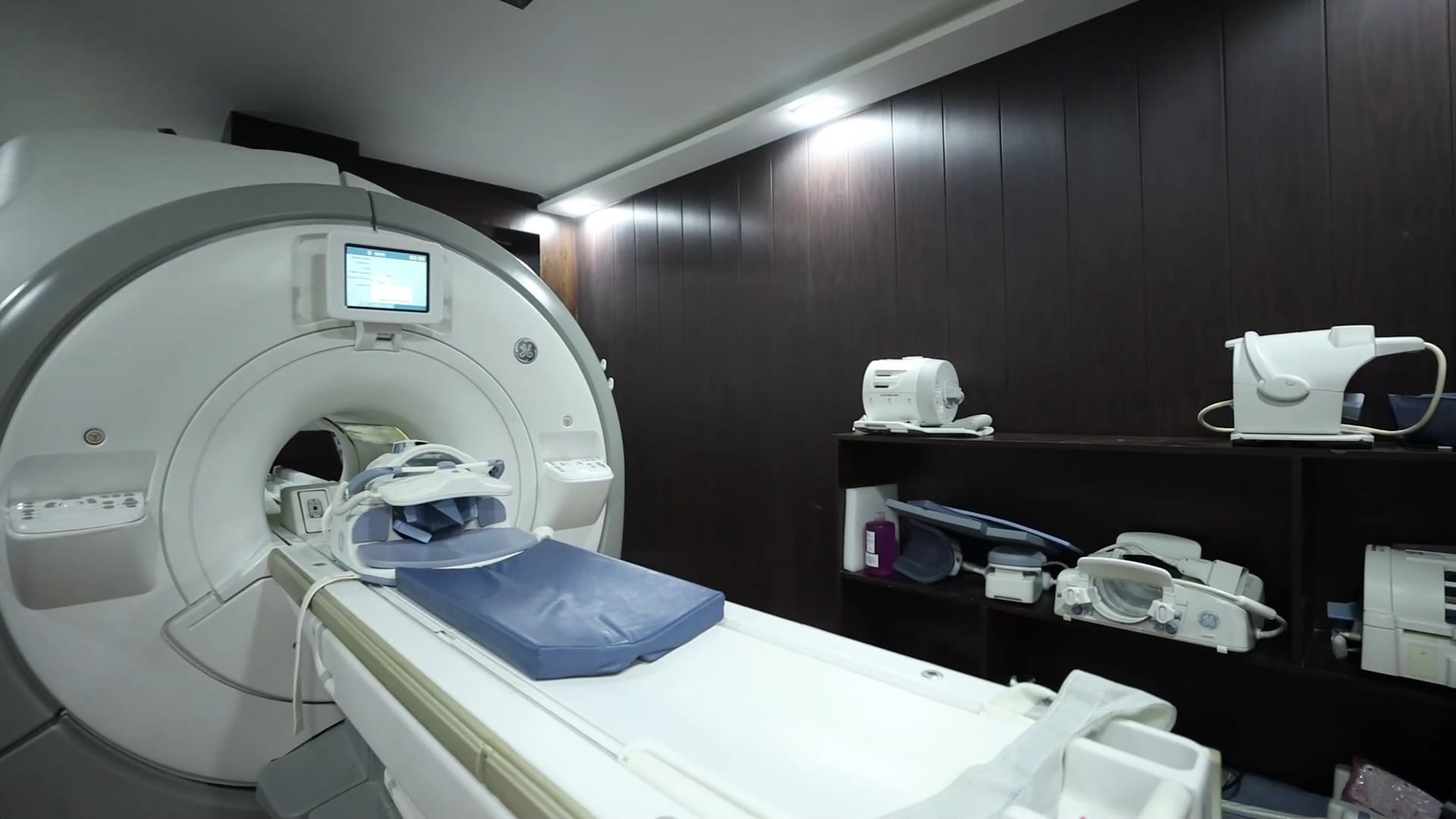
No X-rays and no radiation of any kind.
Twice the field of a 1.5 Tesla scanner, for finer detail or a quicker scan.
Dedicated coils for the brain, every joint, children and the breast.
How an MRI works
- 1
A strong magnet
Lying inside it, the hydrogen atoms in your body line up with the field.
- 2
Radio pulses
Short pulses of radio waves knock them out of line.
- 3
A signal
As they settle back they give off signals, and each tissue gives a different one.
- 4
A picture
A computer turns the signals into slices, in any direction.
What 3 Tesla means
The tesla is the unit in which a scanner's magnet is measured. A stronger field gives a stronger signal, which can be spent on finer detail or a shorter scan. It matters most where detail decides: the brain, the nerves, the joints, the heart and the breast.
More is not always better. The radiologist chooses the method that answers your question.
The right coil for the part
The picture is only as good as the coil around the part being scanned. Tesla keeps dedicated ones.
Brain and nerves
A 32-channel neuro coil, for the brain, the spine and the nerves.
Joints
Dedicated coils for every joint, from the shoulder to the ankle.
Children and breast
A coil sized for a child, and a dedicated breast coil.
Advanced brain imaging
Tesla runs the latest neuro software, each answering a different question.
- DTI maps the bundles of nerve fibres that carry signals.
- Perfusion measures how much blood reaches each part of the brain.
- ASL measures blood flow too, without any injection.
- fMRI finds the areas that control speech and movement, before surgery.
- CSF flowmetry measures the flow of the fluid around the brain and spine.
Beyond the brain
- Cardiac MRI and stress MRI, for the heart.
- Multiparametric prostate MRI and pelvic imaging.
- MR neurography and plexus imaging, for nerves.
- Dedicated breast MRI.
- Whole-body non-invasive angiography.
- Fetal MRI, with Tesla Fetal Care.
Your scan, in order
- 1
Questions about metal
We ask about pacemakers, implants and anything metal in your body, and check them before you go in.
- 2
Change and settle
You may be given a gown. You lie on a table, with a coil around the part being scanned.
- 3
The scan
The table slides in. The machine is loud, so you are given ear protection. You can speak to the team throughout.
- 4
Keep still
A scan takes twenty to forty-five minutes, and keeping still keeps the pictures sharp.
3 Tesla MRI
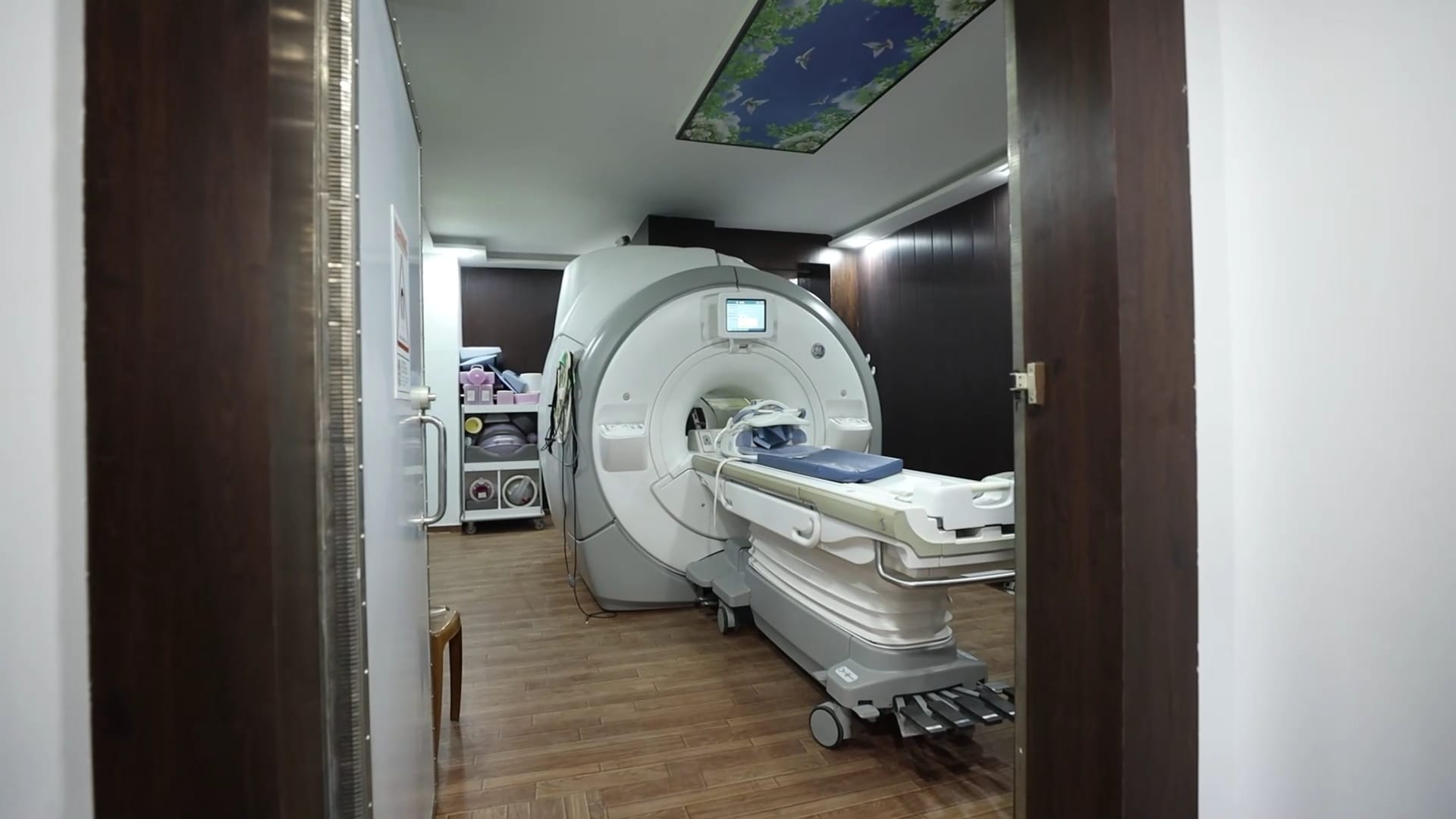
GE Healthcare, at Tesla. A 3.0 Tesla scanner, in a suite built for it.
- 3 Tesla field strength, twice that of a 1.5 Tesla scanner.
- 32-channel neuro coil, joint coils, a paediatric coil and a breast coil.
- DTI, perfusion, ASL, fMRI and CSF flowmetry.
- Cardiac, stress, prostate, breast and fetal MRI.
Keep reading.
Book your scan.
Ask for a time, or leave your number and we will call you.
Or call 1800 210 0108, toll-free.
Quick answers.
Is an MRI safe?
Yes, for most people. It uses a magnet and radio waves, with no X-rays. The magnet attracts some metals, so tell us about any implant, pacemaker or metal in your body before the day.
Who should not have an MRI?
People with some pacemakers or defibrillators, cochlear implants, brain aneurysm clips, or metal in or near the eye need special checks first. Many implants are safe. We need to know which.
I am afraid of closed spaces. What can I do?
Tell us. You can speak to the team throughout, and we can talk you through it. Some people also find it easier to close their eyes before going in.
How long does it take?
Usually twenty to forty-five minutes, depending on the part scanned and the method.